Your Best Brand Strategy Is Stuck in a Google Doc
The framework was never the job. The job is the fight you have after it's approved.
Last time I argued that emotion only becomes a moat if you can fund and defend it. Here's the part nobody wants to hear. Defending it is the actual job, and most brand leaders never do it.
I've watched brilliant brand frameworks die in a Google Doc. Sharp positioning. A real, ownable emotional territory. A deck everyone nodded along to. And then nothing. Not because the thinking was wrong, but because the thinking was the easy part, and everyone treated it like the finish line.
The framework is maybe ten percent of the work. The other ninety is the part nobody talks about. Defending it to a finance team that wants it measurable by Friday. To a growth lead who can prove their channel and can't prove yours. To an exec who loves the deck in the room and funds the dashboard the next morning. That ninety percent is where brand actually wins or loses, and it has almost nothing to do with the quality of the strategy.
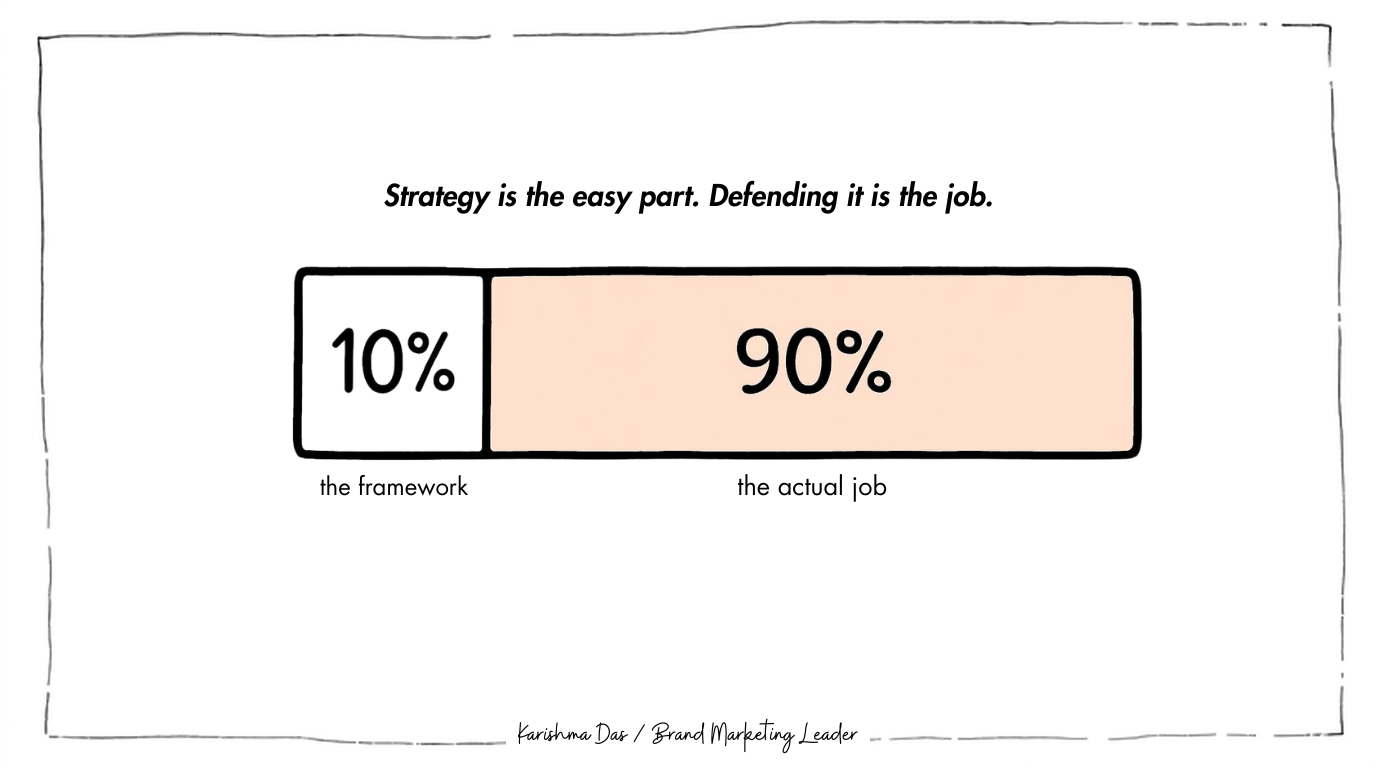
This is the uncomfortable truth about why brand keeps losing the budget war. It isn't that the other side is smarter. It's that too many brand leaders think their job ends when the deck gets approved. They did the satisfying ten percent, the part that feels like strategy, and called it the work. Then they're surprised when the funding quietly evaporates two quarters later.
The brand bets I've seen actually pay off, real money, multiples on the spend, did not win because the framework was elegant. They won because someone fought for it in the room, again and again, in the language the room respected. Numbers. Business outcomes. The patience to make the same case to the same skeptics for a year. The strategy was the easy day. The defense was the job.
So if you're a brand leader, here's the reframe. Your deck is not your deliverable. Your deliverable is a funded, defended line of work that's still alive a year from now. Everything before that is just the pitch.
The framework was never the hard part. Surviving contact with the budget is.